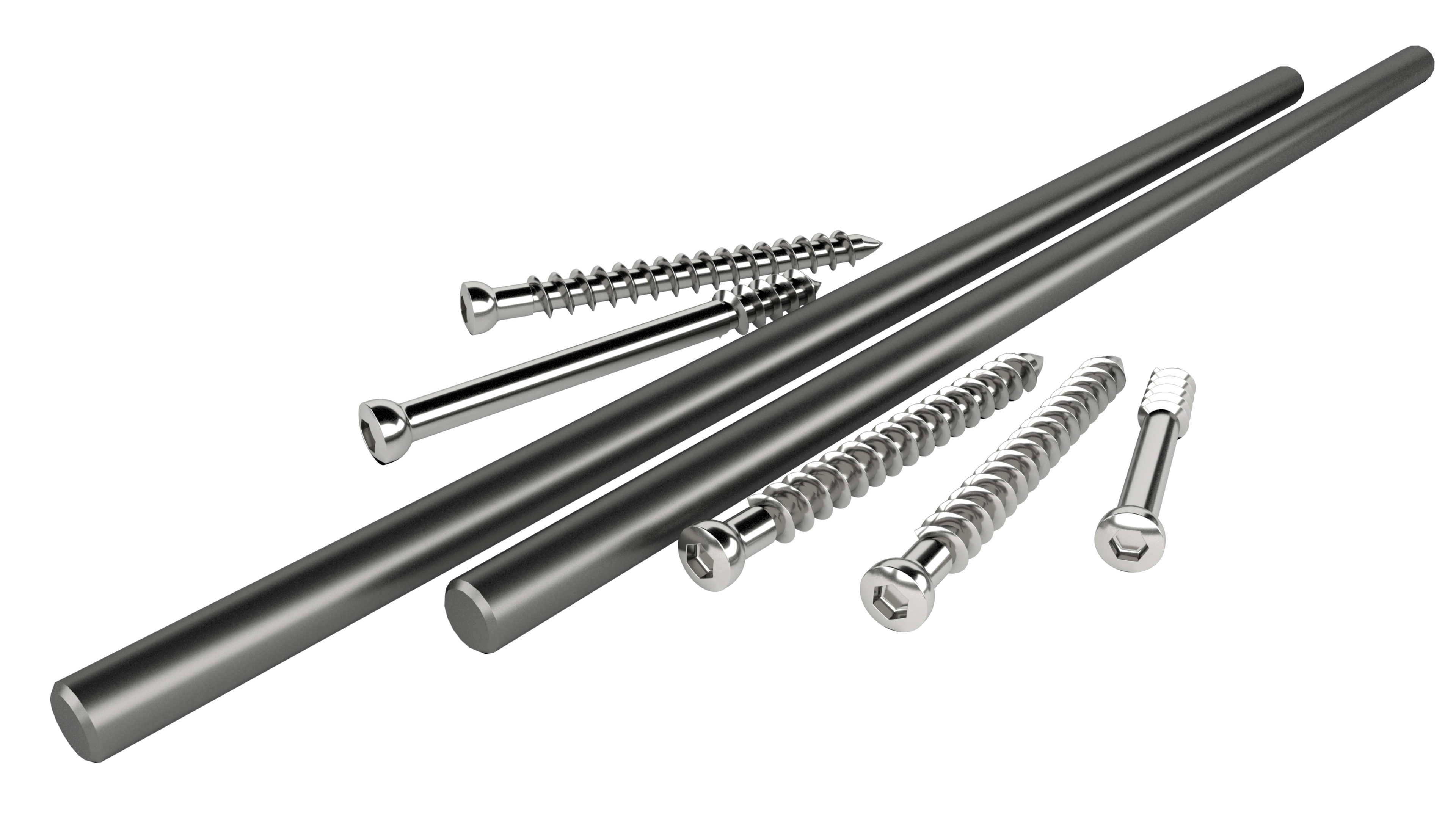
;

Titanium

Stronger, lighter, and more corrosion resistant than standard stainless steel, titanium is a powerful component in applications requiring materials that go the extra mile. In addition to its strength-related properties, titanium offers a distinct advantage over other alloys - impressive biocompatibility. Titanium promotes osseointegration, meaning a bone can grow into the material, further helping to anchor implants in the body.

Talk with a technical expert

Understanding titanium

Titanium comes either as a commercially pure material or alloyed with a secondary element to customize its properties. You can click the links below to learn more.

  • Commercially pure titanium is available in four distinct grades to suit a variety of needs: 1, 2, 3, and 4. These grades are ordered in relation to corrosion resistance, ductility, and strength requirements.
  • Alloyed titanium is made by combining titanium with other materials, allowing you to customize the alloy for specific performance requirements. The alloyed titanium we most commonly work with is Ti-6Al-4V ELI.

 Talk with a technical expert

Product forms and capabilities

Titanium can be processed into a variety of wire, bar, or complex constructions and can be further enhanced with value-added capabilities, such as mechanical assemblies. Click on the product forms below to learn about the ways you can use titanium for your application.

Bar

Strong, straight, and smooth bar made to tight tolerances

Round wire

Wire with a circular cross-section

Shaped wire

Wire with a specialty-shaped cross-section

Flat wire

Wire with a rectangular cross-section

DFT® wire

A composite wire construction integrating two dissimilar materials

Mechanical assembly

Custom crimps, fittings, and end treatments

Coil

Loosely wound coil in large diameters

Surface finishes and material conditions

Processing titanium is no easy feat, as it has a tendency to stick, fret, or cold weld with drawing dies. To offer you the best surface condition possible, we have developed processing techniques to require minimal etching at finish size, yielding a cleaner and smoother surface finish without the heavy etching that is a common practice with many manufacturers.

Typical end uses

Our customers use titanium in applications requiring good biocompatibility and performance under pressure, such as:

  • Pacing leads
  • Needles
  • Sutures
  • Orthopaedics
  • Dental implants

 Talk with a technical expert


Enhanced solutions

When you need the strength of alloyed titanium but can't sacrifice the properties of commercially pure titanium, you may need 4TiTUDE® bar. Equivalent to grade 4 titanium in promoting osseointegration, but with the strength of alloyed titanium such as  Ti-6Al-4V ELI, TiZr, or 4TiTUDE® bar offers the best of both worlds.

Unable to load the form? Click the button below:

Start the conversation

Titanium

Stronger, lighter, and more corrosion resistant than standard stainless steel, titanium is a powerful component in applications requiring materials that go the extra mile. In addition to its strength-related properties, titanium offers a distinct advantage over other alloys - impressive biocompatibility. Titanium promotes osseointegration, meaning a bone can grow into the material, further helping to anchor implants in the body.

Talk with a technical expert

Understanding titanium

Titanium comes either as a commercially pure material or alloyed with a secondary element to customize its properties. You can click the links below to learn more.

  • Commercially pure titanium is available in four distinct grades to suit a variety of needs: 1, 2, 3, and 4. These grades are ordered in relation to corrosion resistance, ductility, and strength requirements.
  • Alloyed titanium is made by combining titanium with other materials, allowing you to customize the alloy for specific performance requirements. The alloyed titanium we most commonly work with is Ti-6Al-4V ELI.

 Talk with a technical expert

Product forms and capabilities

Titanium can be processed into a variety of wire, bar, or complex constructions and can be further enhanced with value-added capabilities, such as mechanical assemblies. Click on the product forms below to learn about the ways you can use titanium for your application.

Bar

Strong, straight, and smooth bar made to tight tolerances

Round wire

Wire with a circular cross-section

Shaped wire

Wire with a specialty-shaped cross-section

Flat wire

Wire with a rectangular cross-section

DFT® wire

A composite wire construction integrating two dissimilar materials

Mechanical assembly

Custom crimps, fittings, and end treatments

Coil

Loosely wound coil in large diameters

Surface finishes and material conditions

Processing titanium is no easy feat, as it has a tendency to stick, fret, or cold weld with drawing dies. To offer you the best surface condition possible, we have developed processing techniques to require minimal etching at finish size, yielding a cleaner and smoother surface finish without the heavy etching that is a common practice with many manufacturers.

Typical end uses

Our customers use titanium in applications requiring good biocompatibility and performance under pressure, such as:

  • Pacing leads
  • Needles
  • Sutures
  • Orthopaedics
  • Dental implants

 Talk with a technical expert


Enhanced solutions

When you need the strength of alloyed titanium but can't sacrifice the properties of commercially pure titanium, you may need 4TiTUDE® bar. Equivalent to grade 4 titanium in promoting osseointegration, but with the strength of alloyed titanium such as  Ti-6Al-4V ELI, TiZr, or 4TiTUDE® bar offers the best of both worlds.

Unable to load the form? Click the button below:

Start the conversation